Maintaining Work-Life Balance As A Busy California Real Estate Agent

As a busy California real estate agent, you know the demands of the job can quickly overshadow personal time.

Balancing client meetings, property showings, and paperwork often leaves little room for your own life.

What if you could implement strategies that not only enhance your productivity but also allow you to reclaim your evenings and weekends?

By exploring effective time management techniques and setting clear boundaries, you might find a path to a more harmonious existence.

The question is, how do you start making those changes without sacrificing your success?

Understanding the Real Estate Landscape

Understanding the real estate environment in California is critical for your success as an agent. With high demand and limited inventory, you’ll face competitive pricing and rapid sales cycles. Recent trends show that the average list price across cities stands at $1,090,000, with significant variance depending on the region, such as price variations by city that can impact your strategies.

Staying ahead means keeping a close eye on market trends and understanding how they affect different property types—whether it’s a coastal home or an urban condo. Knowing buyer demographics can help you tailor your approach, ensuring you’re meeting the needs of your clients effectively.

Pricing strategies are important; you’ll need to navigate inventory challenges while considering regulatory changes that impact your transactions. In a market with median home prices exceeding $800,000, your ability to adapt is key.

Technology innovations, like virtual tours and digital marketing, are no longer optional; they’re fundamental tools that can help you reach a broader audience and streamline your sales process. As you develop your skills and knowledge in these areas, you’ll position yourself as a trusted expert.

Embrace continuous learning and adaptability. The more informed you’re about the market, the better equipped you’ll be to thrive in California’s evolving real estate sector.

The Need for Work-Life Balance

In the fast-paced world of California real estate, balancing your professional and personal life isn’t just beneficial—it’s important for your success and well-being. The demands of the job can lead to high stress levels and potential burnout, making work-life balance necessary.

Without it, you risk health issues like anxiety and insomnia, which can severely impact your overall quality of life. This balance also enhances your job performance, allowing you to meet client expectations while maintaining your mental health.

To thrive in your career while maintaining your mental health, consider these key elements of work-life balance:

  • Set realistic goals: Establish boundaries that allow you to prioritize both work and personal time.
  • Practice stress management: Engage in activities that help you unwind, like meditation or exercise.
  • Nurture personal relationships: Make time for family and friends to foster support and connection.
  • Engage in self-care: Regularly indulge in activities that bring you joy and relaxation.

Achieving this balance isn’t just about productivity; it’s about finding personal fulfillment. When you manage your time effectively, you’ll not only meet client expectations but also nurture your own well-being.

Effective Time Management Techniques

Mastering effective time management techniques is important for real estate agents looking to enhance their productivity and maintain work-life balance. One powerful method you can implement is time blocking. This allows you to allocate specific hours for client meetings, property showings, and administrative tasks. By dedicating time to these activities, you’ll improve your focus and reduce distractions, making your workday more productive.

Additionally, creating a structured schedule can help streamline your daily processes and prevent overwhelming workloads, ultimately leading to better time management and reduced stress setting realistic goals.

Another technique to reflect on is task batching. Group similar tasks together to minimize mental load, enabling you to complete multiple related activities in one focused session. This not only boosts your efficiency but also frees up time for personal commitments.

Regularly review and adjust your time allocation to stay accountable and adapt to changing demands. Establishing clear work hours and communicating them to clients fosters respect for your personal time, ensuring work doesn’t encroach on your life outside the office.

Leveraging Digital Tools

Harnessing digital tools can dramatically enhance your efficiency as a real estate agent, allowing you to focus more on client relationships and less on administrative tasks.

By leveraging the right technologies, you can streamline your workflow and boost your lead generation efforts, which is particularly key in a commission-based environment where every interaction counts.

Understanding commission structures can help you prioritize your efforts effectively. Here’s how:

  • CRM Software: Tools like Follow Up Boss and LionDesk automate follow-ups, helping you manage leads effortlessly and maintain strong client interactions.
  • Marketing Software: Utilize platforms like Placester and Constant Contact to create and distribute marketing materials, ensuring your branding remains consistent and professional without needing extensive design skills.
  • Transaction Management: Dotloop and DocuSign simplify the process from contract to closing, providing digital signatures and reducing paperwork, which ultimately improves the client experience.
  • Mobile Apps: Stay organized on the go by managing tasks and appointments anytime, anywhere, so nothing important slips through the cracks.

Embracing these digital tools not only enhances your productivity but also allows you to dedicate more time to nurturing relationships, ensuring both your business and personal life thrive.

Setting Boundaries for Success

While leveraging digital tools can streamline your workload, it’s equally important to establish boundaries that confirm your personal life thrives alongside your professional endeavors.

Start by setting clear work hours and communicating them to clients. This not only fosters respect for your time but also helps prevent work from infringing on your personal life.

Designate specific areas in your home as “no work” zones. By minimizing distractions in these personal zones, you reinforce the separation between your professional obligations and personal relaxation.

Identify your non-negotiable commitments—like family dinners or exercise sessions—and prioritize them in your schedule.

Utilize digital tools, such as calendars and reminders, to track your work hours and personal activities. This enhances accountability and makes it easier to maintain those significant boundaries.

Regularly review and adjust your time allocation as needed. This ongoing process confirms that you nurture both your career and personal life effectively.

Prioritizing Self-Care

In the hustle of real estate, prioritizing self-care isn’t just an important practice; it’s a necessity for long-term success.

When you take care of yourself, you enhance your mental health, boost productivity, and prevent burnout.

Here are some self-care routines you can easily incorporate into your busy life:

  • Exercise regularly: Aim for at least 30 minutes of physical activity most days to reduce stress and clear your mind.
  • Practice mindfulness: Dedicate just 10 minutes daily to meditation or deep breathing exercises to lower anxiety levels and improve your overall well-being.
  • Eat a balanced diet: Fuel your body with whole foods and stay hydrated to keep your energy levels high and your mind sharp.
  • Schedule downtime: Carve out time for hobbies or relaxation to recharge your batteries and maintain peak performance.

Building Healthy Relationships

Building healthy relationships is key for maintaining balance in your life as a real estate agent. By regularly dedicating time to nurture relationships with family and friends, you can greatly reduce stress and enhance your overall well-being. This is critical in the demanding world of real estate.

Engaging in community events and social gatherings not only strengthens personal connections but also opens up networking opportunities that can benefit your career.

Keep the lines of communication open with your loved ones about your work commitments. This fosters understanding and emotional support, creating a healthier balance between your personal and professional responsibilities.

Prioritize quality time, whether it’s family dinners or weekend outings—these moments improve your mental health and provide a much-needed break from the pressures of work.

Even small gestures, like checking in with friends through texts or calls, can have a big impact. These simple acts of relationship nurturing help sustain your connections and provide emotional support, which is key for coping with the stresses of your real estate career.

Continuous Professional Development

Continuous professional development is a game-changer for real estate agents aiming to thrive in a competitive market. Investing in ongoing education not only enhances your skills but also keeps you relevant. With 87% of top performers prioritizing this, you can’t afford to fall behind.

Consider the following key advantages of continuous learning:

  • Skill enhancement: Regular training can boost your closing rates by 20-30%, equipping you with effective sales techniques.
  • Mentorship benefits: Seeking guidance from experienced professionals can help you achieve your first sale 20% faster, giving you the confidence to succeed.
  • Networking opportunities: Attend industry conferences to build connections—64% of agents find their best leads through networking.
  • Stay updated: 65% of clients prefer working with knowledgeable agents, so keeping abreast of market trends and regulations is important.

Strategies for Long-Term Balance

To truly thrive in real estate, it’s important to balance your professional and personal life effectively. Start by embracing mindful scheduling—set dedicated work hours and protect your personal time. This approach not only enhances your productivity but also plays a significant role in stress reduction.

Implement time management techniques like time blocking and task batching; they help you focus on high-priority tasks without feeling overwhelmed.

Utilizing technology is another key strategy. CRM and transaction management software can streamline your daily operations, freeing up valuable time that you can redirect toward self-care, family, or relaxation.

Remember to regularly review and adjust your goals, ensuring they align with both your professional ambitions and personal commitments. This practice fosters a harmonious work-life balance.

Lastly, don’t underestimate the power of self-care. Schedule downtime for relaxation and exercise, as maintaining your mental and physical health is critical in this demanding industry.

Frequently Asked Questions

How Can I Delegate Tasks Without Losing Control Over My Business?

You can delegate tasks effectively by embracing task outsourcing and establishing clear guidelines. Prioritize effective communication with your team, conduct regular check-ins, and maintain oversight, ensuring you stay in control while enhancing productivity. You’ve got this!

What Are Some Hobbies to Consider for Stress Relief?

To relieve stress, consider practicing mindfulness meditation or exploring creative writing. These activities not only enhance your focus and emotional clarity but also provide a fulfilling outlet for your thoughts and feelings. You’ll feel rejuvenated!

How Do I Handle Demanding Clients While Maintaining Balance?

To handle demanding clients, set clear client expectations and use effective communication strategies. Schedule dedicated times for interactions, implement a CRM system, and assert your boundaries, ensuring you manage their needs without sacrificing your personal time.

What Role Does Exercise Play in Work-Life Balance for Agents?

Exercise plays a significant role in your work-life balance. By boosting your mood and energy, it enhances time management skills, helping you stay focused and motivated. Embrace exercise benefits to tackle demands while prioritizing your well-being.

How Can I Create a Productive Home Office Environment?

To create a productive home office setup, invest in ergonomic furniture, guarantee good lighting, and utilize productivity tools like organizers. Establishing a routine will keep you focused, reducing distractions and enhancing your overall work efficiency.

Conclusion

You’ve got what it takes to thrive as a busy California real estate agent. By prioritizing work-life balance, embracing effective time management, and leveraging digital tools, you can create a sustainable routine that works for you. Remember to set boundaries, invest in self-care, and nurture your relationships. Continuous growth will keep you ahead in this competitive market. Stay focused, stay passionate, and keep working toward that perfect blend of personal fulfillment and professional success!


Overcoming Challenges in the First Year of Your Real Estate Career

Stepping into the real estate world as a new agent promises both challenges and rewards. You’re in good company if you’re looking to carve out a successful path in this competitive field. Surprisingly, the National Association of Realtors (NAR) reveals that a mere 5% of REALTORS® have five years of experience under their belts, highlighting the stark reality that many don’t see their fifth year in the industry. So, what hurdles stand in the way of new agents, and how can you leap over them?

Understanding the challenges of a new real estate career

Embarking on a new real estate career comes with its unique set of challenges, impacting your performance and overall job satisfaction. These challenges may be familiar across sales professions, but some are uniquely tied to the real estate sector.

Challenge 1: Building a strong client base

For any real estate agent, establishing a network of clients is crucial. Generating leads and converting them into clients, however, can prove daunting for newcomers lacking experience, reputation, and referrals. According to realtor.com, lead generation emerges as the primary challenge for rookies, closely followed by lead conversion. To cultivate a robust client base, it’s essential to develop an effective marketing strategy, offer a compelling value proposition, and maintain regular follow-ups. Networking with fellow agents, industry professionals, and potential clients within your community is also vital.

Challenge 2: Dealing with market competition

The real estate market is fiercely competitive, with a multitude of agents competing for the same clients and property listings. The National Association of Realtors (NAR) reported an active membership of 1.5 million REALTORS® in the US in January of 2024. Distinguishing yourself in this crowded field requires offering unique services and staying informed about the latest market trends, data, and regulations to provide your clients with timely and accurate advice. Moreover, adapting to the fluctuating market demands and clients’ expectations is crucial.

Challenge 3: Managing time and productivity

Time management and maintaining productivity pose significant challenges for new real estate agents. The role demands balancing numerous tasks and responsibilities, including prospecting, marketing, staging properties, negotiations, closing deals, and client services. Agents often navigate unpredictable schedules, tight deadlines, and unforeseen emergencies. Effective time management requires a clear understanding of your objectives, a practical plan of action, and a system for prioritizing tasks. Setting boundaries, delegating when possible, and leveraging technology to automate processes can also enhance efficiency.

Challenge 4: Adapting to new technologies

The real estate landscape is continually reshaped by technological advancements. Innovations like social media, online platforms, mobile applications, virtual tours, and artificial intelligence present fresh opportunities and advantages for agents. Yet, these advancements also introduce challenges and potential risks, including concerns over security, privacy, and ethical practices. Staying ahead means being open to learning, investing in relevant tools and training to boost your competencies, efficiency, and service quality, while also being mindful of the new hurdles these technologies may present.

Challenge 5: Handling tricky personalities

Navigating the complexities of different personalities is a significant challenge for new real estate agents. In this profession, you’ll engage with a diverse array of individuals including clients, colleagues, competitors, vendors, and regulators. While some may be a pleasure to collaborate with, others can present more of a challenge—they might be demanding, difficult, or not entirely honest. Successfully dealing with these tricky personalities requires a robust set of skills. Effective communication, negotiation, and problem-solving abilities are essential. Equally important are empathy, patience, and a consistent display of professionalism. Furthermore, it’s critical to have strategies for managing conflicts, handling complaints and criticisms, and safeguarding against potential legal and ethical pitfalls.

Strategies to Overcome Early Career Challenges

Understanding the common hurdles faced by new real estate agents is step one. The next is figuring out how to leap over these hurdles and race towards success. Fortunately, there are proven strategies that can guide you through and help expand your business. Below are actionable tips for each challenge to implement in your practice:

Overcoming Challenge 1: Tips for Building a Strong Client Base

To establish a robust client base, having a strategic marketing plan that highlights your unique selling points and captivates your target audience is key. Some top marketing strategies for real estate agents include:

  • Designing a professional website to display your listings, testimonials, and areas of expertise.
  • Utilizing social media to post relevant content, engage with followers, and attract leads.
  • Growing an email list to send out newsletters, updates, and promotional deals to subscribers.
  • Encouraging past and current clients to refer others and leave reviews.
  • Networking with local agents, professionals, and community members.
  • Joining a brokerage that provides training, support, and lead generation opportunities for newcomers. Choosing the right brokerage is a pivotal decision in your real estate career. Learn about the 6 Essential Considerations For Choosing Your Real Estate Brokerage to make an informed choice.

Overcoming Challenge 2: Strategies for Dealing with Market Competition

In a competitive market, standing out is crucial. Differentiating yourself from other agents by offering unique services is a great starting point. Strategies to distinguish yourself include:

  • Identifying a niche market that aligns with your skills, interests, and personality.
  • Crafting a distinctive brand identity that mirrors your values, style, and aspirations.
  • Delivering top-notch customer service that goes beyond clients’ expectations.
  • Keeping abreast of the latest market trends, statistics, and regulations to inform your clients.
  • Being adaptable to shifts in market conditions and client demands.
  • Collaborating with peers to foster mutually beneficial partnerships.

Overcoming Challenge 3: Tools to Improve Time Management and Productivity

Enhancing your productivity starts with clarifying your goals, creating a feasible action plan, and prioritizing effectively. Tools that can boost your time management and productivity include:

  • A calendar app for scheduling meetings, tasks, and reminders.
  • CRM software for managing contacts, leads, and client relations.
  • A project management tool for organizing projects, tasks, and deadlines.
  • A productivity tracker to monitor your time, habits, and performance.
  • A communication tool for keeping in touch with clients, colleagues, and suppliers.
  • An automation tool for simplifying and speeding up routine tasks.

Balancing your professional and personal life is key to a sustainable career. Learn how with our tips on Maintaining Work-Life Balance As A Busy California Real Estate Agent.

Overcoming Challenge 4: How to Stay Updated on New Technologies

Keeping abreast of technological advancements requires an open mind, curiosity, and a willingness to learn. Ways to stay knowledgeable about the latest real estate technologies include:

  • Reading blogs, magazines, and newsletters focused on the latest real estate technology trends and innovations.
  • Attending webinars, workshops, and conferences that introduce and explain new real estate technologies.
  • Following industry influencers, experts, and thought leaders for insights and advice on adopting new technologies in real estate.
  • Experimenting with novel tools and platforms to improve your skills, efficiency, and service offering.
  • Seeking feedback and guidance from peers, mentors, and trainers on effectively and ethically implementing new technologies.

Overcoming challenge 5: Skills to handle difficult personalities

Dealing with challenging personalities effectively requires several key skills, including robust communication, negotiation, and problem-solving abilities. Additionally, the importance of empathy, patience, and a professional demeanor cannot be overstated. The following skills are particularly crucial in navigating through interactions with complex personalities:

  • Active listening: This involves giving your full attention to the speaker, showing respect for their views by listening carefully, and asking questions that clarify their perspective.
  • Assertiveness: Being able to express your own thoughts, feelings, and needs in a way that is clear and confident, yet avoids aggressiveness or passivity.
  • Empathy: Trying to see things from the other person’s viewpoint, and understanding their emotions, motivations, and concerns.
  • Rapport: Establishing a basis of trust and connection with others by discovering common interests, using humor appropriately, and expressing gratitude.
  • Conflict resolution: Determining the underlying issue of the disagreement, investigating various solutions, and working towards a resolution that benefits everyone involved.

Avoiding the Common Pitfalls of a Real Estate Career

Kicking off a career in real estate comes with its unique set of challenges, and it’s not just about the hurdles of being a newcomer. You must also sidestep certain pitfalls that can negatively impact your growth and success.

Proactively Seeking Mentorship and Support

One effective strategy to navigate through the challenges of a real estate career is by finding a mentor and building a support network. Mentors who are experienced and successful can provide invaluable advice, feedback, and insights. This guidance can help you steer clear of common mistakes and move toward your career objectives. Beyond advice, mentors also offer emotional support, motivation, and encouragement during tough times. You can find mentors by asking your brokerage firm, enrolling in coaching programs, or reaching out to an agent whose work you admire. Additionally, don’t overlook the support from peers, colleagues, and friends—they can give you diverse perspectives and advice.

Continuous Learning and Professional Development

Avoiding the pitfalls of a real estate career also requires a commitment to ongoing learning and professional development. The real estate industry is dynamic, with constant changes in trends, technologies, and regulations. To stay ahead of the curve, you need to continuously enhance your knowledge and skills. This commitment not only boosts your confidence but also keeps you competitive. Consider going beyond state-mandated Continuing Ed requirements by enrolling in online courses, participating in webinars, workshops, conferences, reading industry publications, and pursuing additional certifications to further your professional growth.

Building Solid Industry Networks

Lastly, establishing a strong network within the industry plays a crucial role in avoiding common pitfalls. Networking is a powerful tool for any real estate agent, offering opportunities for lead generation, referrals, and valuable exchanges with other professionals. It’s also foundational in building your reputation, credibility, and trustworthiness in the market. To build and maintain a robust network, join professional associations, attend networking events, engage in online forums, and consistently follow up with your contacts. This approach will not only help you navigate your career more smoothly but also lead to long-term benefits and success.

Final Thoughts

Embarking on a career as a new real estate agent comes with its set of challenges, yet it’s equally filled with opportunities. At the onset, you might find yourself navigating through numerous hurdles like establishing a robust clientele, facing stiff competition in the market, mastering the art of time and productivity management, getting up to speed with the latest technology, and dealing with complex personalities. However, by adopting certain effective approaches such as seeking mentorship, committing to ongoing learning and professional growth, and forging strong connections within the industry, you can effectively surmount these obstacles. These strategies are your stepping stones to expanding your business, honing your skills, and realizing your professional aspirations.

We trust that this blog post has provided a solid path for new real estate agents striving to overcome the initial challenges of their career. If you’ve been thinking about starting your own real estate career, now is a great time to jump in! Start by reviewing the requirements for getting a real estate license, and when you’re ready, we hope you’ll join the thousands of students who owe their start to Chamberlin Real Estate School!

Mastering Virtual Real Estate Tours and Online Open Houses for New Agents

The advent of COVID-19 and subsequent social distancing norms have nudged many prospective buyers towards preferring online property viewings before any physical visits. This shift underscores the necessity for you to creatively build and manage virtual real estate tours and online open houses. These strategies not only broaden your reach to more potential buyers but also help you work more efficiently and distinguish your services in a saturated market. This blog post will address questions like: How do you craft compelling virtual tours and open houses online? What strategies ensure their success, and what pitfalls should you steer clear of? It will also guide you towards top-notch online real estate courses in California, ensuring you’re well-prepared for your licensing exam and ready to embark on a fulfilling journey as a real estate agent. For those just starting out, understanding the 5 Steps To Choosing The Right Online Real Estate Course In California can provide foundational knowledge essential for mastering virtual tours.

The Role of Technology in Real Estate

Technology has revolutionized the real estate sector, opening up new avenues and introducing fresh challenges for buyers and sellers alike.

The Rise of Virtual Interaction

The advent of the internet has ushered in unprecedented levels of virtual interaction among those involved in real estate, enabling connections and collaborations that span distances and time zones. Social media platforms, video conferencing, and instant messaging have become indispensable for Realtors in marketing their properties, engaging with clients, and generating leads. A National Association of Realtors survey highlights that 77% of Realtors leverage social media for business, while 93% of homebuyers turn to online websites during their home search. The COVID-19 pandemic has further accelerated this shift towards virtual interactions, pushing many to adopt virtual tours, online open houses, and digital contracts to continue transactions safely and efficiently.

The Importance of Virtual Reality in Property Showcasing

Virtual reality (VR) technology, capable of creating immersive simulations of environments viewable through special headsets or glasses, has emerged as a game-changer for real estate agents. Particularly effective for presenting properties that are under construction or newly built, VR allows agents to offer realistic visualizations of the completed projects. This aids buyers in making well-informed choices based on these virtual previews. The benefits of VR extend to cost savings and improved efficiency for both agents and buyers, by cutting down on travel expenses and time. Research by Matterport shows that 95% of real estate professionals believe VR will significantly benefit the industry, with 74% of homebuyers more inclined to purchase a property they can explore through VR.

Understanding Virtual Tours

Virtual tours are increasingly becoming a chosen method for showcasing properties and captivating potential buyers within the real estate realm.

What Is A Virtual Tour?

A virtual tour recreates an existing location through a series of videos, still photos, or 360-degree imagery, often enriched with multimedia elements like sound effects, music, narration, and text, alongside floor plans. It stands apart from live television usage for tele-tourism by offering an opportunity to navigate a space or property online without the necessity of a physical visit. Virtual tours offer a rich, immersive experience and are packed with additional details and features that elevate the presentation. They are accessible via computers, tablets, smartphones, or VR headsets.

How To Capture A Virtual Tour

Creating a virtual tour requires a 360-degree capable camera, a stable tripod or monopod, and editing software. Options for cameras include dedicated 360 camcorders like the Ricoh Theta Z1 or the Insta360 One R, or smartphone applications capable of utilizing your device’s camera, for example, the Zillow 3D Home app or the Asteroom 3D Tour Kit. Proper setup involves selecting the right location, adjusting camera settings for optimal lighting, ensuring the camera is level and at an appropriate distance from objects or walls. Capture involves systematically taking 360 photos, usually utilizing a timer or remote app, moving the camera approximately every meter and a half to ensure full coverage. The editing process involves stitching these images together using the camera’s desktop software, with the possibility of further enhancements using Lightroom, Photoshop, or similar tools.

Using Virtual Tours in Property Listings

Virtual tours serve as a powerful tool to market your property listings, significantly broadening the pool of prospective buyers. You can design and house your virtual tours on platforms such as Kuula, Matterport, or CloudPano, adding interactive elements like hotspots, labels, and maps, alongside music or other multimedia elements to enrich the experience. Virtual tours can be easily shared through links or embed codes, making them perfect for inclusion on your website, social media channels, or listing platforms like Zillow or Realtor.com. Furthermore, linking your tours to Google Street View and Maps, connected to a business profile, can enhance visibility and engagement, making it more likely for potential buyers to reach out or even make an offer.

How to Conduct an Online Open House

An online open house is a digital event providing a platform to showcase your property to interested buyers who cannot, or choose not to, visit in person. This type of event is an excellent tool for expanding your reach, conserving resources, and increasing interest and offers in your property. However, a successful online open house requires thoughtful planning and preparation.

Choosing The Right Platform For An Online Open House

Selecting the appropriate platform or tool to stream or record your video is the initial step in organizing an online open house. Several options exist, each with unique features to consider. Popular platforms include:

  • Video conferencing software like Zoom, Google Meet, or Skype offers the ability to host a live event with real-time interaction and questions from participants. Recording the session and sharing it afterwards is also possible. Note that access to advanced features may require a paid subscription.
  • Social media platforms such as Facebook Live, Instagram Live, or YouTube Live enable broadcasting to a broad and varied audience. These platforms allow for immediate viewer feedback through comments and reactions. Videos can be edited and uploaded to your profiles or pages, though security and privacy settings may be limited.

Choosing the best platform for your open house depends on your goals, budget, and preferences. A combination of different platforms might be ideal to maximize your property’s visibility and appeal.

Tips to Engage Potential Buyers During An Online Open House

Engaging your audience is crucial for a successful online open house. Here’s how to actively involve potential buyers:

  • Publicize your event across multiple channels well in advance to build anticipation and attract a larger audience.
  • Schedule the event at a convenient time, possibly holding multiple sessions to suit different schedules and time zones.
  • At the start, introduce yourself and the property, setting a friendly tone and providing a clear overview of the event.
  • Conduct a thorough walkthrough, emphasizing the property’s highlights and benefits, to give viewers a well-rounded perspective.
  • Promote viewer interaction by encouraging questions and comments, ensuring their concerns are addressed in real-time.
  • Follow up with attendees after the event, offering additional information or resources, and thanking them for their participation.

With these strategies, your online open house not only markets your property effectively but also creates an engaging and memorable experience for potential buyers.

Challenges and How to Overcome Them

Virtual tours and online open houses, while innovative, come with their own set of challenges. As a real estate agent, facing obstacles that might hinder the efficacy and quality of your presentations is common.

Technical Difficulties

Technical difficulties rank high among the frustrating challenges you might encounter. These issues encompass equipment failures, software glitches, or problematic internet connections that could interrupt or halt your virtual tours and online open houses. For instance, camera malfunctions, video freezing or buffering, and poor audio quality are common nuisances. To counter these technical hitches, consider the following steps:

  • Conduct a thorough test of your equipment and software prior to your event to ensure compatibility, updates, and optimal charging.
  • Opt for a stable and swift internet connection, steering clear of public or unsecured networks that might compromise stability and security.
  • Develop a contingency plan for unforeseen technical failures, such as having backup equipment, a prerecorded video, or a plan to switch to a phone call.

Conveying Property Details Accurately

Accurately presenting property details is another significant hurdle. This involves providing clear, honest descriptions of the property’s characteristics, dimensions, condition, and worth. The virtual format might introduce challenges such as visual distortion, missing details, or unintended exaggeration due to camera angles, lighting, or editing. To enhance the accuracy of property details, adapt these practices:

  • Utilize a high-caliber camera capable of 360-degree shots, adjusting its settings to reflect the property’s true lighting and hues.
  • Enhance your video presentation with additional information such as dimensions, labels, maps, and floor plans for added clarity and insight.
  • Be upfront about any imperfections, potential repairs, or factors that could influence the property’s appeal or value. Avoid concealing or misrepresenting pertinent details to sidestep legal or ethical complications.
  • Support any assertions or comparisons concerning the property with credible sources, references, or evidence, ensuring compliance with legal standards and industry regulations to avoid misinformation.

This important skill is discussed in detail in Chamberlin’s real estate course for prospective licensees.

Building Connection With Potential Buyers

Finally, forging a connection with potential buyers poses its challenges, particularly in the absence of physical interactions. Establishing trust, rapport, and engagement virtually requires innovation and effort. Here are strategies to create meaningful connections with your viewers:

  • Seek commonalities, share relatable anecdotes, and display empathy to personalize the experience. Understanding their needs, preferences, and aspirations allows for a tailored presentation that resonates.
  • Involve your audience by posing questions, encouraging comments, and responding to queries. Aim for an interactive, lively presentation that incorporates humor, emotions, and storytelling to captivate and maintain their interest.
  • Maintain engagement post-presentation through a thank-you note, a feedback survey, or sharing the video or listing link. Keeping in touch fosters a continued dialogue, nudging them further along in their decision-making process.

Final Thoughts

In today’s digital era, leveraging virtual tours and online open houses is a game-changer for showcasing properties and attracting a broader clientele. These tools not only extend your reach to a more diverse audience but also offer time and cost efficiency, all the while adhering to health and safety guidelines. Nevertheless, to harness their full potential, a degree of planning, technical know-how, and communication expertise is essential. Throughout this blog post, we’ve outlined essential tips and best practices for crafting and presenting virtual tours and online open houses. Additionally, we’ve discussed strategies for utilizing social media and online marketing to amplify your promotions. If you’re a budding real estate agent in California keen on accelerating your career, our online real estate courses are designed for you. We pride ourselves on offering the top online real estate courses in California, tailored to equip you for your licensing exam and kickstart a prosperous career in real estate. As you consider this exciting career path, remember to explore Path To Real Estate Success for more comprehensive guidance on navigating the real estate industry successfully!

Eco-Friendly Real Estate: A Lucrative Path for California’s Next Generation of Agents

Eco-friendly real estate is gaining momentum and presents multiple advantages for agents and their clients. In this post, we will dissect what defines eco-friendly real estate, discuss the reasons it stands as a profitable avenue for upcoming California agents, and guide you on how to use this information to help you win over your buyers.

What is Eco-friendly Real Estate?

Eco-friendly real estate, alternatively known as green real estate, describes properties constructed or remodeled to prioritize environmental sustainability. These homes or commercial spaces often include energy-efficient appliances, embrace renewable energy (like solar or wind power), have water conservation fixtures, use natural building materials, and possess qualities that reduce their carbon footprint while promoting healthier indoor air. Additionally, eco-friendly properties might be located in neighbourhoods encouraging walking, biking, or public transportation, alongside amenities such as public parks, community gardens, or healthy living features.

Examples of eco-friendly real estate properties include:

  • The net-zero Minawetu residence in Martha’s Vineyard boasting solar panels, geothermal HVAC systems, and rainwater collection systems.
  • An off-the-grid, 3-bedroom home in Pahoa, Hawaii, with self-sufficient electricity (photovoltaic system), water, and waste management, plus facilities for growing organic food.
  • The Bullitt Center, a commercial office building that is often referred to as the greenest commercial building in the world. It is designed to be highly energy-efficient and environmentally friendly.

The Importance of Eco-friendly Real Estate

Opting for eco-friendly real estate matters for a variety of reasons. Sustainable properties contribute to the conservation of our planet’s resources and lessen the emissions driving climate change. They also offer residents a healthier living space with improved air quality and natural illumination, resulting in enhanced overall well-being. Economically, eco-friendly homes tend to be more cost-effective in the long run, yielding savings on utilities, maintenance, and even offering potential tax advantages. From a real estate perspective, there is a burgeoning demand for properties with green credentials, thus increasing their market value and appeal.

For a California real estate agent, specializing in eco-friendly real estate not only opens the door to a market with promising returns and higher client satisfaction but also aligns with broader environmental and societal benefits. To dive deeper into the economic aspects of green properties, consider reading ‘2024 First-Time Homebuyer Trends in California‘, which touches on the growing preference for sustainable living among new buyers.

The Lucrative Potential of Eco-friendly Real Estate

Eco-friendly real estate isn’t just good for the planet and our health—it’s also a financially savvy move, particularly in California where specializations in this sector can lead to economic gain.

Eco-Realty: An Emerging Market

With the rise of sustainability consciousness, the quest for energy efficiency, and a broader range of green financing options, eco-realty has become a burgeoning market. A National Association of Realtors report indicates a significant interest in green living, with 59% of agents noting clients’ enthusiasm for sustainability, and 70% acknowledging the value of energy efficiency highlights in listings. By mastering the nuances of eco-friendly real estate, California agents have the chance to thrive by meeting the eco-conscious desires of their clientele.

The Financial Benefits of Green Real Estate

Owning or selling a green home doesn’t just benefit the environment—it can also lead to cost savings and financial gains. Homeowners love the reduced utility and maintenance bills, with green homes saving up to 30% on energy and 50% on water expenses when compared to standard properties. Additionally, green properties tantalize buyers and renters, often fetching higher values; in fact, research from the University of California, Berkeley and University of California, Los Angeles, reveals that green-certified homes in California sold for a premium of 9% over comparable properties. Real estate agents can enjoy the perks of a unique selling proposition, increased investment returns, and heightened client satisfaction by guiding their clients towards sustainable living solutions.

Demand and Market Trends for Eco-friendly Properties in California

California stands at the forefront of the green real estate movement with supportive regulations, enticing incentives, and a robust demand for eco-friendly living spaces. Influencing factors in the Californian market include:

  • CALGreen, the California Green Building Standards Code, which ensures new buildings meet stringent energy, water, waste, and environmental quality specifications.
  • The California Solar Initiative, offering rebates and incentives for solar panel installations on varied building types.
  • The California Energy Commission, which extends financial support such as loans, grants, and tax credits for energy-efficiency and renewable energy enhancements in buildings.
  • Projections from the California Association of Realtors suggest a revived housing market in 2024, anticipating a jump in sales and median home prices, propelled by economic vitality, favorable mortgage rates, and an increased housing inventory.
  • Consumer trends highlight a rising interest in sustainability, alongside health and comfort considerations, particularly among residents of the innovation-centric Bay Area and the diverse Southern California region.

Educational Resources for Green Real Estate Agents

There are various educational resources available to help green real estate agents thrive, including green designation courses and EcoBroker certification.

Green Designation Courses

The GREEN designation program, revered among educational offerings and provided by the National Association of Realtors (NAR), stands out for real estate agents committed to energy efficiency and sustainable real estate. By completing this program, you gain exclusive marketing tools, cutting-edge market research, access to industry webinars, and listings in online directories—key advantages to grow your enterprise and stand out in the marketplace. Furthermore, the program equips you to skillfully market green properties, engage with environmentally-conscious clients, and offer recommendations for home performance enhancements. Requirements for earning the GREEN designation include active NAR membership, two days of coursework (available online or in-person), and an annual membership.

EcoBroker Certification

The EcoBroker certification, provided by EcoBroker International, is another excellent educational pursuit for any licensed real estate professional keen on mastering contemporary topics that affect real estate transactions. As an EcoBroker, your knowledge will extend to environmental concerns like radon, asbestos, lead, and potential indoor hazards, as well as strategies to help clients leverage energy-efficient technologies and sustainable energy solutions. This certification also brings with it a suite of marketing resources, increased online visibility, and network-building opportunities that are vital for expanding your client base and enhancing your professional stature. To secure EcoBroker certification, you’re required to complete three online courses, successfully pass an exam, and pay a one-time fee.

Building a Successful Career in Eco-friendly Real Estate in California

If you’re a California real estate agent focusing on eco-friendly properties, mastering the regulations, market trends, and industry best practices is essential.

Understanding California’s Green Building Standards Code

As a forward-thinking agent, understanding the California Green Building Standards Code (CALGreen) is crucial. This trailblazing regulation is mandatory in California and covers critical aspects such as energy efficiency, water conservation, waste reduction, and indoor environmental quality for new and updated buildings. Knowledge of this code is not only necessary for compliance but also advantageous for communicating its benefits to clients. It’s key to articulate how CALGreen can yield cost savings, health improvements, and increased property values. To deepen your understanding, explore resources provided by the California Department of Housing and Community Development, the California Building Standards Commission, or consider International Code Council’s online courses.

Networking in the Green Real Estate Community

For eco-friendly real estate agents, robust networking can unlock new prospects, offer valuable insights, establish fruitful partnerships, and generate client referrals. Get involved with both local and national Real Estate Investors Associations, maximize your LinkedIn presence, perhaps start a thought leadership podcast or email newsletter, attend relevant industry events, and seek out seasoned mentors. Successful networking not only enlarges your contact base but also fortifies your reputation as a knowledgeable and committed advocate of sustainable living.

Navigating Prospective Clients Towards Eco-friendly Choices

Encouraging clients to embrace green living can be challenging, particularly with obstacles like higher initial costs, limited knowledge, or resistance to change. Employ persuasive techniques such as showcasing positive societal influences, highlighting habit-forming benefits, using compelling storytelling, and focusing on experiential over material value to motivate your clients. Introduce them to green financing aids, including rebates, incentives, and tax credits, which can lighten the upfront cost burden while highlighting long-term financial and environmental gains. Your commitment to their sustainable journey can result in mutually rewarding transactions and a base of contented, loyal customers ready to champion your services.

The Bottom Line

For those poised to specialize in eco-friendly real estate within the Golden State, the time to act is now. It all starts with a real estate license, and Chamerlin Real Estate School is the obvious choice. As you embark on this rewarding career path, remember that ongoing learning and adaptation are key. ‘Overcoming Challenges in the First Year of Your Real Estate Career‘ offers guidance on navigating the ups and downs you’ll encounter. Please reach out – we’re here to help!

Luxury real estate in California: Is it right for you?

The allure of California – with its sunny weather, diverse culture, and breathtaking landscapes – makes it one of the most desirable places to live. This state is a hotspot for some of the nation’s priciest and most opulent homes, attracting affluent individuals in pursuit of their perfect dwelling. For those considering diving into the luxury real estate market, familiarizing yourself with the most sought-after cities is crucial. Explore our guide on the 9 Cities In California All Aspiring Real Estate Agents Should Know In 2024. But first, you’re probably wondering: how does one become a luxury real estate agent in our state, and is it the right path for you?

Entering the realm of luxury real estate means stepping into a specialized market that demands not just a license and enthusiasm for sales but a deep comprehension of high-end clients’ needs, luxury market dynamics, and sophisticated marketing and sales techniques. It’s critical to cultivate a robust network of contacts, earn referrals, and seek guidance from mentors to elevate your status and business acumen in this elite segment.

In this guide, we’ll delve into the specifics of launching a career as a luxury real estate agent in California, assisting you in determining its suitability for your professional goals. We’ll tackle the essential topics to prepare you for the journey ahead!

Challenges of Specializing in Luxury Real Estate

Embarking on a career in luxury real estate is no small feat. This sector demands an exceptional degree of professionalism, dedication, and resilience. Here are some notable challenges professionals in the field often encounter:

  • Extensive knowledge of high-end homes and communities is essential. Specialists in luxury real estate must be knowledgeable about the intricate features and amenities these properties offer. They should also understand the history behind them, the evolving market trends, the preferences of affluent buyers, and the myriad of regulations, taxes, and zoning laws that influence these grand estates.
  • Luxury clients seek a white-glove service and unrivaled expertise. With sophisticated expectations, these clients demand bespoke service, sage advice, and pathways to exclusive listings. Their agents must embody discretion and trustworthiness, safeguarding client privacy at every turn.
  • Unique properties necessitate innovative marketing. The distinctiveness of luxury homes—from their architectural splendor to their historical roots or sustainable features—requires a creative marketing approach. Agents must craft strategies that not only highlight the properties’ unique value but also resonate with a niche audience.
  • Commissions hinge on infrequent, yet sizeable sales. Since luxury agents are compensated via commission post-sale, the stakes are high. These prestigious homes often linger on the market longer due to a limited buyer pool, mandating that agents invest more time and effort per sale, and navigate the waters of unpredictability and financial risk.

Rewards of Specializing in Luxury Real Estate

The real estate sector presents diverse paths, but choosing to concentrate on the luxury market can be both rewarding and fulfilling. Here are some of the key benefits this niche can offer:

  • Access to exclusive properties in sought-after locations. Agents immersed in luxury real estate enjoy the privilege of representing some of the world’s most magnificent properties. These homes not only showcase exceptional art and craftsmanship, but also offer stunning views and upscale lifestyle options. Agents get to share their appreciation for these fine homes with their clients.
  • The potential for high commissions on multi-million dollar transactions. High-end properties carry high price tags, and with commissions being a percentage of the sale, agents can earn significant sums from just a single transaction. Curious about potential earnings? Learn more about Real Estate Agent Compensation in California to understand what you can expect from your transactions.
  • Opportunities to network with elite agents and wealthy clients. Networking is key in luxury real estate, where one can forge relationships with accomplished peers and influential clientele. These connections may lead to additional business opportunities and collaborations. Moreover, learning from the industry’s best practices is an invaluable aspect of these relationships.
  • The chance to deliver exceptional service to discerning clients. Luxury clients are in search of top-notch service and excellence. As an agent, you can demonstrate your expertise and dedication by understanding and exceeding the unique needs and expectations of your clients, nurturing trust, and building lasting loyalty.
  • Enhancing one’s status and reputation as a luxury specialist. Being recognized as an expert in luxury real estate can elevate an agent’s status within the industry. Gaining certifications, accolades, and recognition from esteemed organizations and publications adds to one’s credibility and professional visibility.

Characteristics Needed to Succeed in Luxury Real Estate

The realm of luxury real estate is both highly competitive and exacting, demanding a specialized skill set for success. It requires more than just the average agent to navigate the market of opulent homes and discerning clients. Industry leaders pinpoint several critical characteristics for those aiming to excel:

  • Extensive knowledge of architecture, design, and high-end amenities is imperative. Professionals in luxury real estate must possess comprehensive insight into what constitutes a property’s luxury status. This includes an understanding of architectural styles, interior design, premium materials, cutting-edge technology, and exclusive amenities. Moreover, the ability to articulate the significance and allure of these luxury features to clients is paramount.
  • Adept marketing skills are essential to effectively showcase luxury listings. Agents must be both inventive and tactical when promoting properties that typically present a challenge to sell. Utilizing various promotional tools—professional photography, videography, social media, online platforms, print advertising, specialized events, and personal referrals—is crucial. Tailoring marketing strategies to accentuate each property’s distinctive benefits and the lifestyle it offers helps captivate the appropriate audience.
  • Robust negotiation skills are crucial for navigating high-stakes, intricate deals. Luxury real estate agents should exhibit proficiency and confidence in negotiations, particularly those involving substantial finances, numerous stakeholders, and complex agreements. Professionals must adeptly manage objections, surmount challenges, and finalize deals efficiently while safeguarding their clients’ interests and satisfaction.
  • Discretion and tact are non-negotiable when handling the affairs of celebrity and VIP clients. These clients prize their privacy and security, necessitating an agent’s ability to manage confidential information discreetly, steer clear of unwelcome attention, and honor non-disclosure agreements. Furthermore, agents must exercise diplomacy and good manners in accommodating their clients’ varied requests and temperaments.
  • Patient perseverance is needed when engaging with selective buyers and facing infrequent, rapid sales. Luxury real estate agents should be prepared to diligently work with buyers who hold precise standards and lofty expectations for their ideal residences. The capacity to attentively listen, present fitting selections, and navigate clients through the acquisition process is vital. Additionally, it’s important to recognize that luxury properties typically require more time to sell and may result in less frequent, yet more substantial sales.

Getting Started in Luxury Real Estate in California

Becoming a luxury real estate agent in California is an exciting venture, filled with both challenges and rich rewards. Below are actionable steps to launch your career in this exclusive market:

  • Gain specialized training and certifications. Joining the elite circle of luxury real estate professionals requires a deep understanding of market dynamics, exquisite properties, and affluent clientele. Enhance your expertise by participating in industry-specific courses, seminars, and reading material. Consider obtaining prestigious credentials such as the Certified Luxury Home Marketing Specialist (CLHMS) designation from the Institute for Luxury Home Marketing—a symbol of distinction in the field.
  • Learn high-end neighborhoods intimately. Mastery of California’s luxury locales is crucial for success. Familiarize yourself with each neighborhood’s history, culture, amenities, regulations, and lifestyle. Knowledge of current inventory, pricing, and demand is essential. This insight can be gathered through online research, attending open houses, networking, and exploring these affluent areas personally.
  • Partner with an experienced luxury agent. A partnership with a seasoned luxury real estate expert can be a valuable pathway into the market. Absorb their expertise, finesse, and tactical approaches while leveraging their network and standing. Look for a mentor or a team environment that offers guidance and affiliated support as you navigate your early career stages.
  • Market yourself as a niche expert. To draw in high-end clients, present yourself as a consummate expert who delivers exemplary service and outcomes. Develop a robust personal brand, a polished website, a dynamic social media footprint, and gather testimonials and success narratives. Craft a marketing strategy highlighting your specialized knowledge, value, and distinctive offerings, utilizing diverse methods such as digital platforms, traditional media, events, and referrals to captivate your intended audience.
  • Build your reputation steadily with high-end clients. Client trust and loyalty are the cornerstones of a prosperous career in luxury real estate. Attune to the desires, preferences, and aspirations of your high-end clientele, offering them tailored service, informed counsel, and entry to exclusive listings. Maintaining confidentiality, courtesy, and professionalism is imperative. Aim to surpass client expectations to secure their elation. Collect feedback, endorsements, and referrals to expand your business footprint and acclaim.

Final Thoughts

Entering the luxury real estate market in California is both challenging and rewarding. As an aspiring agent in this specialized field, you must possess certain qualities:

  • Extensive knowledge of architecture, design, and the finest amenities
  • Advanced marketing skills for showcasing high-end properties
  • Expert negotiation techniques to navigate significant, intricate transactions
  • Discretion and tact for interactions with celebrities and VIP clients
  • The patience to cater to discerning buyers and manage a longer sales cycle

To kick-start your career, consider the following:

  • Secure specialized training and certifications
  • Acquire in-depth knowledge of upscale neighborhoods
  • Collaborate with a seasoned luxury real estate agent
  • Position yourself as an authority in the niche
  • Gradually forge a stellar reputation amongst affluent clients

If this career direction intrigues you, the starting point is a real estate license. Chamberlain Real Estate School is one of California’s oldest and most trusted providers of pre-licensing education. We leverage cutting-edge learning technology and the convenience of an all-online course to help you get to your real estate goals efficiently and cost-effectively. If you’re ready to get started on a career in luxury real estate, click here – or give us a call if you have any questions!

Real Estate Marketing Essentials: Attracting Buyers and Sellers in a Competitive Market

Aspiring real estate agents need not only a solid foundation in the principles of real estate but also innovative strategies for marketing properties to stand out in California’s competitive marketplace. Chamberlin Real Estate School, a leader in online real estate education, offers in-depth knowledge and skills to help you navigate and excel in your local real estate market. In this post, we’ll explore effective listing strategies, targeted advertising techniques, and ways to create captivating property presentations.

Understanding the California Real Estate Market

Before diving into marketing strategies, it’s essential to understand the unique aspects of the California real estate market. It’s a diverse and often fast-paced environment, with various property types ranging from urban apartments to coastal luxury homes. This diversity demands a tailored approach to marketing each property. If you are new to the field, this post offers valuable insights into navigating this dynamic market.

Effective Listing Strategies

A great listing strategy begins with understanding your target market. Who are the potential buyers? What are their preferences and needs? Crafting your listings to appeal to this audience is key. Remember, listings are more than just facts about the property; they’re a narrative that connects buyers emotionally to the space.

Key Components of a Successful Listing:

  1. High-Quality Images: Invest in professional photography. High-resolution images showcasing the property’s best features can significantly impact a buyer’s perception.
  2. Engaging Descriptions: Use compelling language to describe the property. Highlight unique features and benefits, like a spectacular view or a recently renovated kitchen.
  3. Virtual Tours: In today’s digital age, offering a virtual tour can give you an edge. It allows potential buyers to experience the property remotely.
  4. SEO Optimization: Ensure your listings are SEO-friendly. Use relevant keywords to improve visibility on search engines and real estate platforms.

Targeted Advertising: Reaching the Right Audience

In a digital era, your advertising strategy must be data-driven and targeted. Utilize social media platforms, real estate websites, and email campaigns to reach potential clients. Real estate blogs are an excellent source of ideas, in addition to these…

Tips for Targeted Advertising:

  1. Social Media Marketing: Platforms like Facebook and Instagram offer advanced targeting options. Use these to reach potential clients based on location, interests, and more.
  2. Google Ads: Pay-per-click campaigns can be effective. Target specific keywords related to real estate in California.
  3. Email Marketing: Build an email list and send out newsletters with your latest listings and real estate tips. Personalize these emails to increase engagement.

Captivating Property Presentations

The presentation of a property, whether online or in person, can make or break a deal. Your aim should be to create an experience that leaves a lasting impression.

How to Create Captivating Presentations:

  1. Staging: Professionally stage homes to make them more appealing. A well-staged home helps buyers envision themselves living there.
  2. Storytelling: Every property has a story. Use this to create an emotional connection. Perhaps it’s a historic home or one where notable figures once lived.
  3. Technology: Use technology like 3D models and augmented reality to provide an immersive experience.

Continuous Learning and Improvement

To remain competitive, continuous learning is vital. Chamberlin Real Estate School offers not only an excellent pre-license course for those preparing for the California real estate exam, but continuing education to maintain licensure – all in a convenient online, on-demand format.

Why Choose Chamberlin Real Estate School?

When selecting a real estate school, it’s crucial to choose one that not only imparts essential knowledge but also provides a supportive learning environment tailored to your success. Chamberlin Real Estate School stands out in several key areas:

Instructor Support

At Chamberlin, we believe in personalized support for each student. When you enroll in our pre-license courses, you are assigned a “Personal Instructor.” These instructors are more than just educators; they are licensed real estate professionals with real-world experience. This means you get to learn from those who have not only mastered the theoretical aspects of real estate but have also navigated the practical challenges of the California real estate market. Having a personal instructor allows for a more tailored learning experience, where you can have your content-related questions answered promptly and accurately.

California Experts

Our expertise in the California real estate market is unmatched. Since 1949, Chamberlin Real Estate School has been dedicated to delivering California-specific content and exam preparation. This long-standing focus ensures that our curriculum is directly aligned with the requirements and nuances of the California real estate exam. Our deep understanding of the state’s real estate environment translates into a curriculum that is both comprehensive and relevant, providing our students with the best possible preparation for success in the California real estate market.

Money Back Guarantee

We are committed to your satisfaction and success. Chamberlin Real Estate School offers a unique promise of quality and confidence: if you try our courses for 30 days and find that you are not satisfied, we will process a refund. This money-back guarantee underscores our confidence in the quality of our education and our dedication to your career success. When you sign up with Chamberlin, you do so knowing that there is no risk – only the opportunity to launch or enhance your career in real estate with the best possible education and support.

Final Thoughts

In conclusion, excelling in the California real estate market requires a blend of solid real estate knowledge and innovative marketing strategies. By creating effective listings, utilizing targeted advertising, and presenting properties in captivating ways, you can significantly increase your chances of success. And with Chamberlin Real Estate School’s comprehensive online course, you’ll be well-prepared to embark on this exciting career path. Remember, real estate is not just about selling properties; it’s about creating connections and experiences that turn houses into homes.

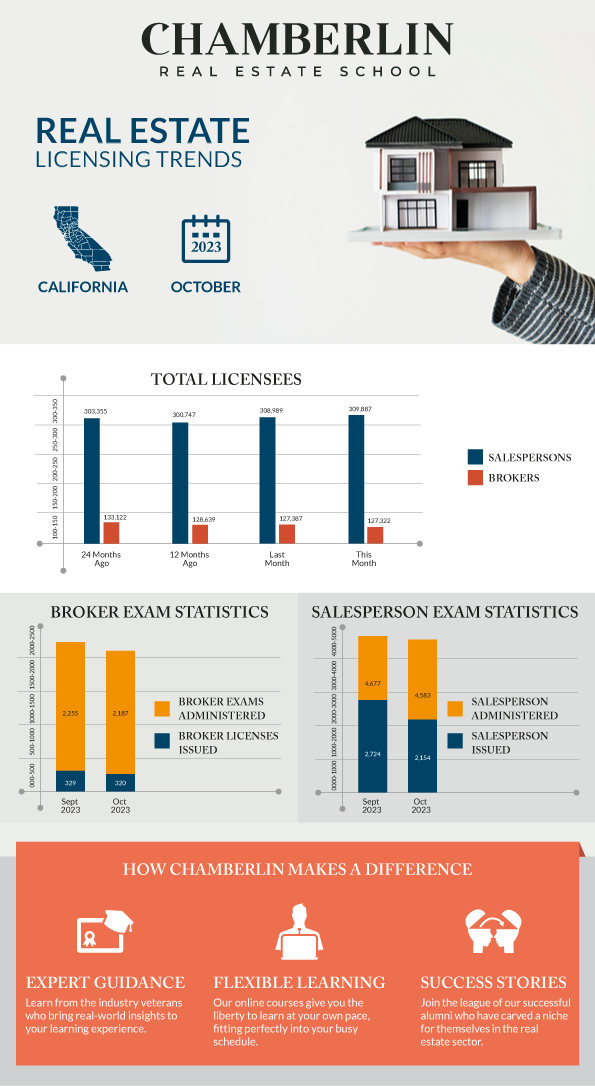
California Real Estate Licensing Trends: October 2023

How Many Brokers & Salespersons Are Licensed in California?

According to the CA Department of Real Estate (DRE), here are the total number of Brokers and Salespersons licensed in October 2023 compared to September 2023. The numbers also show the total amount of licensees from 1 year ago and 2 years ago.

  • Brokers:
    • This Month: 127,187
    • Last Month: 127,322
    • 12 Months Ago: 128,604
    • 24 Months Ago: 133,598
  • Salespersons (Agents):
    • This Month: 310,024
    • Last Month: 309,887
    • 12 Months Ago: 301,843
    • 24 Months Ago: 305,685

Breaking Down the Trends

A Growing Salespersons’ Community

You might notice there was a decrease of roughly 3,800 Salesperson licensed 2 years ago compared to the total number licensed only a year ago. One would think the number of agents would continue to become lower considering the real estate market was dealing with a large increase in interest rates. The opposite actually occurred, and the number of licensed agents increased up to 310,024 in October of 2023. That was an increase of almost 9,000 licensed individuals in one year.

Brokers: The Backbone of the Industry

Although there is a slight dip in the number of brokers compared to the previous years, their substantial presence in the industry signifies the overall strength of the market. Becoming a broker opens up avenues for higher responsibilities and rewards. If you aim for a position of leadership, pursuing a broker’s license is a great step to take.

California Salesperson Licenses Issued vs Exams Administered

  • New Salesperson Licence Issued (Agent)
    • This Month: 2,154
    • Last Month: 2,724
    • 12 Months Ago: 2,991
  • Salesperson (Agent) Exams Administered
    • This Month: 4,583
    • Last Month: 4.677
    • 12 Months Ago: 4,716

What Is The Passing Rate of The California Real Estate Exam?

As you can see, over half of the people who took the state exam did not pass and get their license in October. Only 47% of test takers were issued a California real estate license that month. The September numbers were much better with 58% of the passing students obtaining a license. One year ago in October 2022, about 63% of people passed the exam and were licensed. From what we have seen, the average number of people each year who pass is 50% or less.

California Broker Licenses Issued vs Exams Administered

Here are the October and September number of Broker examinations taken and Broker licenses issued:

  • New Broker Licenses Issued
    • This Month: 320
    • Last Month: 329
    • 12 Months Ago: 395
  • Broker Exams Administered
    • This Month: 2,187
    • Last Month: 2,255
    • 12 Months Ago: 2,991

Why do so many brokers fail the state exam? In October, 2,187 people took the Broker exam, and only 320 passed. That means only 14.6% of the people who took the exam passed and received a broker license. September was not any better with 14.5% of examinees passing and getting licensed. The Broker exam is more difficult than the Salesperson exam. It contains 50 more questions and you must pass with a 75% or higher score. These statistics show if you do become a broker you will be certifiably more knowledgeable than your peers. This is a unique selling point when obtaining new clients.

How Chamberlin Makes a Difference

The process to get your real estate license or broker license is confusing. Which courses do you need to take? Why does the DRE require Brokers to take so many classes? We help people with all these questions and provide DRE-accredited coursework so you can qualify to take the state exams. Our success is also attributed to our exam preparation and crash course which helps both Brokers and potential new agents prepare. Other characteristics include:

  • Expert Guidance: Learn from the industry veterans who bring real-world insights to your learning experience.
  • Flexible Learning: Our online courses give you the liberty to learn at your own pace, fitting perfectly into your busy schedule.
  • Success Stories: Join the league of our successful alumni who have carved a niche for themselves in the real estate sector.

Feel free to reach out to us, and we’ll be happy to guide you at every step.

Source: https://www.dre.ca.gov/stats/2023-2024.html

6 Essential Considerations for Choosing Your Real Estate Brokerage

Choosing the right brokerage is a often the scariest decision for aspiring real estate agents. It’s about finding a match that supports your career goals and works well with the foundational knowledge you gain through your licensing education. Let’s explore six key factors to consider when making this choice.

Training and Education

  • Continuous Learning: Brokerages that prioritize education might offer weekly market trend webinars, monthly sales strategy workshops, and even provide access to annual real estate conferences to ensure their agents are well-versed in the latest industry practices and standards. This ongoing training can help you stay updated on the latest industry trends and regulations.
  • Complementary Education: The right brokerage will offer training that complements what you’ve learned in licensing courses, providing a seamless transition from education to practice. They will also show you where to get your real estate continuing education so your license never expires.
  • Chamberlin’s Edge: At Chamberlin Real Estate School, we give you the foundational knowledge, which can be built on by the training provided by your brokerage.

Company Culture

  • Workplace Dynamics: Evaluate how a brokerage’s work environment and dynamics align with your expectations. Whether it’s a competitive atmosphere or a collaborative one, it should suit your working style.
  • Shared Values: It’s essential to join a brokerage whose values align with yours. Whether it’s a commitment to sustainability, community involvement, or innovation, these shared values can enhance job satisfaction.
  • Ethical Standards: We ensure our students at Chamberlin Real Estate School understand the importance of ethics, which is something you’ll want to see reflected in your brokerage’s culture.

Marketing and Tech Support

  • Marketing Tools: A brokerage with a strong marketing platform can offer you tools like listing syndication, a personal website, and social media management, which can greatly increase your visibility and lead generation.
  • Tech Resources: From CRM systems to mobile apps, the tech support provided by a brokerage can significantly impact your efficiency and ability to serve clients effectively.
  • Chamberlin Prep: We prepare students with an understanding of how technology is used in real estate so they can quickly adapt to a brokerage’s tools and platforms.

Mentorship and Support

  • Structured Mentorship: Some brokerages may pair you with top-performing agents who will guide you through your first few sales, offering hands-on advice on everything from crafting compelling listings to negotiating deals. Others might have formal mentorship programs that include shadowing opportunities, weekly one-on-one coaching sessions, and access to an experienced agent’s insights on building a successful client base.
  • Support Networks: Look for brokerages that have a clear support system, whether it’s administrative assistance or access to a knowledgeable help desk for when you have questions.

Business Model Flexibility

  • Workspace Options: Today’s brokerages vary from traditional office setups to modern, virtual platforms. Your preference for a fixed location versus the ability to work remotely should inform your choice.
  • Adaptable Schedules: Some brokerages offer adaptable schedules that can help manage the demands of personal life and work, which is crucial for maintaining a healthy work-life balance.
  • Learning Your Way: Chamberlin Real Estate School offers online real estate courses, providing the kind of flexibility that you’ll enjoy as a real estate agent.

Commission and Transparency

  • Clear Commission Structures: Understanding how you’ll be paid is crucial. Look for brokerages with clear and fair commission structures that offer a good balance between your effort and earnings. For example, some brokerages may offer a traditional split where you receive a set percentage of every transaction. Others might have a 100% commission model where you pay a flat fee per transaction or monthly office fee instead of sharing a percentage of your commissions. Graduated commission splits that increase as you reach certain sales thresholds within a year can also be available, rewarding agents for higher performance.
  • Upfront Financial Discussions: A brokerage that is transparent about costs such as desk fees, transaction fees, and other potential expenses shows that they value honesty and your financial well-being.
  • Financial Insight from Chamberlin: We educate our students on the various commission structures and what they can mean for their income, helping them to make informed decisions when choosing a brokerage.

Closing Thoughts

Selecting the right brokerage can set the stage for a fruitful real estate career. It’s a decision that should be made with care, considering how well a brokerage’s offerings align with the education and values you hold. Chamberlin Real Estate School aims to provide you with the knowledge and skills needed to make the best choice for your future in real estate.

Ready to take the first step? Enroll with Chamberlin, a California Real Estate School where successful careers start!

The 18 Best Real Estate Blogs for New Agents to Follow

Real estate is filled with endless opportunities to learn, grow, and make a significant impact on people’s lives. However, breaking into this competitive field requires a well-rounded understanding of the market, legal regulations, and effective selling strategies. Reading reputable real estate blogs is a practical way to quickly amass a wealth of industry insights. Whether you’re looking to stay updated on the latest market trends or seeking advice on kickstarting your real estate career, following the right blogs can provide a solid foundation. Here are 18 of the best real estate blogs that every aspiring agent in California should follow to navigate through the real estate waters successfully.

National Association of Realtors (NAR) Blog

The official blog of NAR offers a plethora of resources and insights into the real estate industry, making it a must-follow for aspiring agents.

Inman

If staying updated with the latest news in the real estate industry is what you’re after, Inman is your go-to resource. Inman offers a wide range of articles on market trends, legal matters, and technological advancements, giving a comprehensive view of the real estate industry.

The Close

The Close offers an excellent mix of marketing tips, tech advice, and actionable strategies for real estate agents aiming to elevate their careers.

ActiveRain

ActiveRain offers a community blog platform where real estate professionals share their insights and experiences, providing a real-world glimpse into the real estate industry.

Zillow Porchlight

Zillow Porchlight offers a balanced mix of real estate tips, market analysis, and home improvement ideas. For new agents, understanding what homebuyers are looking for is crucial, and this blog provides just that.

Redfin Blog

Redfin Blog delves into current market trends and provides a plethora of tips for both agents and homebuyers. The practical advice offered on this blog can significantly shorten the learning curve for new agents.

Realtor.com Blog

With a wide range of topics covered, Realtor.com Blog is a treasure trove of information. From market trends to professional advice for agents, it provides an extensive knowledge base.

BiggerPockets Blog

BiggerPockets is ideal for those interested in real estate investment. It provides a platform to learn and discuss various real estate investment strategies, making it a valuable resource.

Tom Ferry Blog

Gain insights from Tom Ferry, a renowned real estate coach who shares valuable tips on sales, marketing, and mindset to help you succeed in your real estate career.

Fit Small Business Real Estate

This blog is an excellent resource for real estate education, marketing tips, and general business advice, designed to help new agents thrive.

Geek Estate Blog

Geek Estate Blog focuses on real estate technology and internet marketing strategies, which are crucial in today’s digital-driven market.

RISMedia

RISMedia is a reputable source covering real estate news and trends. It also provides educational articles beneficial for new agents wanting to expand their knowledge.

Coach Carson

Learn about real estate investing basics and financial independence from a real estate perspective with Coach Carson.

CRE Online

Focusing on real estate investing, CRE Online provides articles and forums discussions beneficial for both new and seasoned investors.

PropertyShark Real Estate Blog

Stay updated with market trends, real estate news, and interviews with industry professionals through the PropertyShark Real Estate Blog.

Real Estate Tomato

This blog concentrates on online marketing strategies for real estate agents, a skill vital for success in the modern market.

HousingWire

Delve into real estate finance and the mortgage sector with HousingWire, aiding in understanding the economic aspect of real estate.

LuxuryRealEstate.com Blog

If luxury real estate is your jam, this blog focuses on high-end properties and luxury market trends, providing a unique perspective.


Closing Thoughts

Equipping yourself with a diverse knowledge base is essential for a successful career in real estate. Following these recommended blogs will not only keep you informed about the latest industry trends but also offer a wealth of tips and strategies to help you excel in your career. As you continue on this learning journey, consider taking the next step by enrolling in Chamberlin Real Estate School’s online courses to prepare for the California real estate exam and embark on a rewarding career path.

Check out our course offerings and register today to take the first step towards achieving your real estate career goals in California. Stay informed, stay ahead, and let Chamberlin Real Estate School be your guiding partner in your real estate journey.

8 Things Every New Real Estate Agent Should Know

As a new real estate agent, you’re stepping into a competitive arena where your success hinges on a few key insights.

You’ll need to master personal branding and effective communication to build trust with clients, while also leveraging technology to enhance your visibility in the market.

Understanding the nuances of market cycles and time management will greatly influence your decision-making and productivity.

But these are just the beginning; there are important aspects you might not have considered yet that could make all the difference in your career.

What comes next could redefine your approach entirely.

Personal Branding and Relationships

In today’s competitive real estate market, crafting a unique personal brand is important for standing out and building trust with clients. Your brand should reflect your story and background, making it easier for potential clients to connect with you. By using personal storytelling in your interactions, you create relatability that not only makes you memorable but also encourages repeat business and referrals.

Consistency across all your marketing materials—like business cards and social media profiles—is important. It builds recognition and credibility, reinforcing your brand in the minds of potential clients.

Engage regularly with past clients through check-ins and appreciation events; these efforts strengthen client partnerships and foster long-term relationships.

When you view clients as long-term partners rather than mere transactions, you cultivate a sustainable client base. Your approach should focus on building meaningful connections that encourage trust and loyalty.

This perspective won’t only enhance your reputation but also contribute greatly to your business growth. In real estate, personal branding and relationships go hand in hand, so invest the time and effort to create a brand that resonates with your audience.

Technology and Marketing Strategies

Steering through the ever-evolving terrain of real estate requires savvy agents to embrace technology and effective marketing strategies. Utilizing Customer Relationship Management (CRM) systems can streamline your client interactions, enhancing relationship management and ultimately leading to increased sales and client retention.

Implementing virtual tours and augmented reality tools allows potential buyers to explore properties immersively from anywhere, greatly improving their experience. Coupled with digital marketing strategies—like SEO, targeted email campaigns, and social media advertising—you’ll boost your visibility and generate leads. Remember, 93% of online experiences begin with a search engine, so make sure you’re easily found.

High-quality professional photography is another game-changer. Listings with stunning visuals attract 61% more views than those with average photos, leading to quicker sales and higher offers.

Time Management and Productivity

Effective time management is key for new real estate agents working hard to succeed in a competitive market. To enhance productivity, allocate specific hours each week for client meetings, property showings, and administrative tasks. This structured schedule not only organizes your time but also helps to prevent burnout by setting clear boundaries between work and personal life, allowing you to recharge.

Incorporate time management techniques like time blocking to prioritize tasks effectively. By designating chunks of time for specific activities, you can focus better and accomplish more. Reserve a minimum of two hours weekly for market research and networking to stay informed and build valuable connections.

Don’t hesitate to embrace task delegation. By outsourcing administrative tasks like data entry or social media management to assistants or utilizing automation tools, you can concentrate on your core business activities. This strategic approach not only frees up your time but also enhances your overall productivity.

Effective Communication Skills

Mastering communication skills can make or break your success as a new real estate agent. Timely and professional responses to client inquiries are important; research shows that replying within five minutes greatly boosts your chances of converting leads into clients.

Practicing clear communication helps you avoid misunderstandings, particularly when you simplify complex real estate terms for your clients.

Active listening is another key component of effective communication. Studies indicate that honing your listening skills can improve client satisfaction by 30%, allowing you to build stronger relationships and respond to their needs more effectively.

Regular follow-up communication also matters; maintaining contact can elevate client retention rates by 25%, showcasing your commitment and fostering trust.

Lastly, don’t underestimate the importance of negotiation skills. Agents who excel in negotiation can secure deals that are 10-15% better for their clients, ultimately enhancing your reputation and success in the industry.

Understanding the Market

Building strong communication skills lays the groundwork for your success, but understanding the real estate market is just as fundamental. Familiarizing yourself with market cycles—phases of boom, bust, and recovery—will help you anticipate shifts in demand and adapt your pricing strategies accordingly.

Conducting a Comparative Market Analysis (CMA) is critical. This process allows you to evaluate property valuation based on recent sales, current listings, and prevailing market conditions in your local area. Keep a close eye on economic indicators like job growth, interest rates, and inventory levels, as these factors directly influence real estate pricing and buyer behavior.

Additionally, analyzing local trends, such as demographic shifts and neighborhood fluctuations, enables you to tailor your strategies to meet the specific needs of your target market.

Staying informed about California real estate regulations and laws is also significant; this guarantees compliance and positions you to provide clients with accurate, relevant advice.

Continuous Learning and Development

Embracing continuous learning is significant for new real estate agents looking to thrive in a competitive market. Staying updated on industry regulations, market trends, and best practices is key to remaining knowledgeable and competitive.

Attend seminars, workshops, and webinars regularly to enhance your skills and create valuable networking opportunities with industry professionals.

Pursuing specialized industry certifications, such as those in property management or commercial real estate, can notably differentiate you from your competitors. These certifications not only expand your service offerings but also demonstrate your commitment to professional growth.

In addition, engaging with industry publications, blogs, and newsletters guarantees you’re informed about the latest news, emerging technologies, and changes in real estate laws that could impact your practice.

Many states require continuing education for license renewal, emphasizing the importance of ongoing professional development.

Seek out mentorship opportunities, as learning from experienced agents can provide invaluable insights and guidance.

Financial Management

As you commence your real estate career, understanding financial management is key for achieving long-term success. Effective financial management can help you maximize your earnings and prepare for future growth. Here are three key areas to focus on:

1. Commission Structures: Familiarize yourself with typical commission rates, usually ranging from 5% to 6%, and understand how splits with your brokerage affect your take-home pay.

2. Budgeting Strategies: Anticipate spending 10% to 30% of your income on important expenses like marketing, technology, and education.

Create a budget that accounts for these costs to guarantee financial stability, especially during your first year.

3. Tax Planning: Set aside 25% to 30% of your earnings for taxes. Since real estate commissions are subject to self-employment and income tax, proper tax planning is critical.

Utilizing accounting software to track your income and expenses will help you maintain financial health and prepare for tax season.

Additionally, seeking financial advice and exploring investment opportunities, like real estate syndicates or rental properties, can further grow your wealth beyond just commissions from sales.

Licensing and Regulations

Navigating the complex terrain of licensing and regulations is critical for new real estate agents aiming to establish a successful career. Each state has unique licensing requirements that you’ll need to navigate, including pre-licensing education, passing an exam, and fulfilling continuing education credits for license renewal.

For instance, in California, agents must complete 45 hours of continuing education every four years, focusing on ethics, agency, and fair housing courses.

Beyond licensing, understanding regulatory compliance is important. You must familiarize yourself with federal, state, and local regulations, particularly fair housing laws that prevent discrimination based on race, color, religion, sex, national origin, familial status, or disability.

Moreover, knowing local zoning laws is key, as these regulations dictate land use, building codes, and property development, which directly impact property values and marketability.

Lastly, adhere to the National Association of Realtors’ Code of Ethics, which promotes professionalism and integrity in all agent-client relationships.

Frequently Asked Questions

How Do I Choose the Right Brokerage to Join?

To choose the right brokerage, evaluate their culture, commission structure, training programs, and technology resources. Consider marketing support and location benefits, and seek agent mentorship to align with your career goals and guarantee long-term success.

What Are the Best Networking Strategies for New Agents?

To build your network, engage on social media, attend community events, join networking groups, participate in online forums, and seek mentorship programs. Local meetups also offer significant opportunities to connect and grow your professional relationships.

How Do I Handle Difficult Clients or Situations?

When handling difficult clients, prioritize client communication and active listening. Stay calm to facilitate conflict resolution, set clear expectations early, and show empathy. Document interactions to maintain clarity and support your position when needed.

What Types of Insurance Do Real Estate Agents Need?

As a real estate agent, you need professional liability and errors omissions insurance to protect against claims. General liability covers bodily injury, while business insurance safeguards your office assets. Don’t overlook these key protections.

How Can I Build a Referral Network Quickly?

To build a referral network quickly, engage actively on social media and participate in community events. Showcase your expertise online, and foster relationships locally to encourage word-of-mouth referrals and strengthen your professional connections.

Conclusion

In your expedition as a new real estate agent, mastering these important elements will set you up for success. By focusing on personal branding, effective communication, and leveraging technology, you’ll build strong relationships and enhance your visibility. Stay informed about market trends, manage your finances wisely, and adhere to licensing regulations to guarantee compliance. Embrace continuous learning to remain competitive in this vibrant industry. With dedication and the right strategies, you’ll thrive in your real estate career.