This post was last modified on November 18, 2026.
Imagine discovering that your neighbor’s fence is two feet inside your property line. Or maybe their new shed extends onto your land. What started as a simple home improvement project could now become an expensive property dispute.
These situations are examples of encroachment in real estate, and they’re more common than you might think. While some encroachments are minor inconveniences, others can create legal headaches, affect property values, and complicate the sale of a home.
The good news? Many encroachment issues can be resolved without going to court. Whether you’re a homeowner, buying property, or preparing for your California real estate exam, understanding encroachments can help you avoid costly mistakes.
What Is an Encroachment in Real Estate?
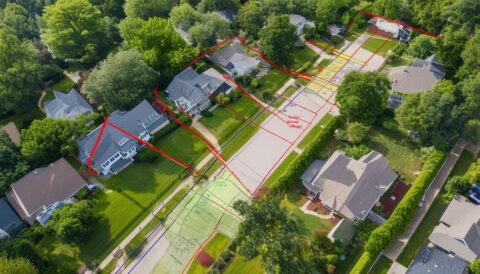
An encroachment occurs when a structure, improvement, or other physical feature extends onto someone else’s property without permission or another legal right to occupy that space.
In simple terms, something belonging to one property crosses the boundary onto another.
For example, suppose your neighbor builds a fence that extends three feet into your backyard. Even if the mistake was unintentional, the fence may be considered an encroachment.
Other examples include:
- A garage built partially across a property line
- A driveway extending onto a neighboring lot
- A roof or balcony hanging over another property
- A retaining wall constructed beyond the owner’s boundary
- Landscaping improvements that extend onto someone else’s land
Encroachments matter because property ownership includes more than just the right to live on or use land. It also includes the right to control how that land is used, subject to applicable laws and other property rights.
To better understand these ownership rights, check out our guide to real property and what ownership includes.
Common Types of Encroachments
Not all encroachments are equally serious. Some are easy to correct, while others may require expensive construction work or legal assistance.
Here are some of the most common situations property owners encounter.
1. Fence Encroachments
Fence disputes are among the most recognizable property boundary problems.
Imagine purchasing a home with a beautifully fenced backyard. A few years later, a survey reveals that the fence was built two feet onto your neighbor’s property.
Now you have a problem.
Even though you didn’t install the fence, you may need to work with your neighbor to resolve the issue.
Depending on the circumstances, the solution could involve moving the fence, negotiating a boundary agreement, or establishing another legally recognized arrangement.
2. Building and Structural Encroachments
Structural encroachments can be especially challenging because correcting them may involve major construction expenses.
Examples include:
- A garage that crosses the property boundary
- A shed built partially on neighboring land
- A roof overhang extending across a property line
- A deck or patio that occupies part of an adjacent lot
Consider a homeowner who builds a garage without first verifying the property boundaries. After construction, a survey reveals that one corner of the garage sits on the neighbor’s land.
Moving a fence might be relatively simple. Moving a garage is another story.
This is why verifying property boundaries before beginning construction is so important.
3. Trees and Landscaping
Trees, bushes, and landscaping can also create disputes between neighbors.
For example, a neighbor’s tree branches may extend over your backyard, blocking sunlight or dropping leaves onto your patio.
However, overhanging branches are not necessarily treated the same way as a building or fence encroachment. Tree ownership, trimming rights, and liability can depend on state and local laws.
In California, property owners generally have certain rights to trim encroaching vegetation, but those rights have limitations. Improper trimming that damages a tree can create liability.
Before cutting branches or removing vegetation, it’s wise to understand the applicable rules.
4. Driveway Encroachments
Driveway encroachments can create disputes over property access and ownership.
Suppose two neighboring homes have driveways located close together. One homeowner expands their driveway without realizing the new pavement crosses the property line.
The affected neighbor may object, especially if the driveway interferes with landscaping, parking, or future construction plans.
Driveway disputes can also involve easements, which are legal rights allowing someone to use another person’s property for a specific purpose.
An important distinction: An authorized easement is not necessarily an encroachment. A driveway crossing someone else’s land may be perfectly legal if the owner has a valid easement.
Understanding this difference is particularly important for real estate professionals.
How to Identify a Property Encroachment
You might assume that an existing fence, wall, or driveway accurately marks the boundary between two properties.
Unfortunately, that’s not always true.
Property boundaries are determined by legal descriptions and surveying evidence, not simply by where previous owners installed improvements.
Here are several ways to identify potential encroachments.
Review Your Property Documents
Start by reviewing your deed, title documents, and any available property maps.
These records may contain useful information about legal boundaries, easements, and restrictions affecting the property.
However, a deed alone may not make it easy to determine exactly where a boundary falls on the ground.
Hire a Professional Land Surveyor
One of the most reliable ways to investigate a suspected encroachment is to hire a licensed land surveyor.
A professional survey can help identify:
- The location of property boundaries
- Buildings or improvements crossing those boundaries
- Existing survey markers
- Potential conflicts between improvements and recorded property information
A survey can provide valuable evidence when discussing a boundary issue with a neighbor.
Look for Warning Signs
Some encroachments are easier to spot than others.
Watch for fences that appear out of alignment with neighboring properties, structures built unusually close to property lines, or driveways extending into adjacent lots.
If you’re purchasing a home, identifying these issues is part of performing proper due diligence in a real estate transaction.
Discovering a potential encroachment before closing can save considerable frustration later.
How to Resolve an Encroachment in Real Estate
Finding out that someone has built on your property can be frustrating.
But before hiring an attorney or demanding that a structure be removed, consider a more practical approach.
Many encroachment disputes begin with an honest mistake and can be resolved through communication.
Step 1: Confirm the Property Boundary
Before confronting your neighbor, make sure an encroachment actually exists.
Review available surveys and property records. If necessary, hire a professional surveyor to establish the boundary.
You don’t want to start a dispute based on an incorrect assumption.
Step 2: Talk to Your Neighbor
Once you understand the situation, have a friendly conversation with your neighbor.
Explain what you’ve discovered and share any supporting documentation.
For example, you might say:
“I recently had our property surveyed, and it looks like part of the fence may be on my property. Could we take a look at it together and figure out the best solution?”
This approach is often more productive than immediately threatening legal action.
Your neighbor may not even realize there’s a problem.
Step 3: Explore Possible Solutions
Depending on the situation, several solutions may be available.
Remove or relocate the encroachment. If the problem involves a fence or small structure, moving it may be the simplest option.
Negotiate an agreement. The property owners may agree to a legally documented arrangement allowing the improvement to remain.
Consider an easement. In some circumstances, an easement may allow continued use of the affected portion of land without transferring ownership.
Discuss a property sale or boundary adjustment. If both owners agree, transferring a small portion of land may resolve the issue, subject to legal and local approval requirements.
Any agreement involving property rights should be properly documented with assistance from qualified professionals.
Step 4: Consider Mediation
What happens if your neighbor refuses to cooperate?
Mediation may be a useful next step.
A mediator is a neutral third party who helps both sides discuss the dispute and work toward an agreement.
Mediation can be less expensive and less confrontational than going to court.
It may also help preserve your relationship with someone who lives next door.
Step 5: Consult a Real Estate Attorney
If informal discussions and mediation fail, it may be time to speak with a real estate attorney.
An attorney can review your property records, explain your rights, and recommend the appropriate next steps.
Depending on the circumstances, legal remedies may include seeking removal of the encroachment, monetary damages, or a court order addressing the disputed property rights.
The appropriate solution depends on the facts and applicable law.
Can an Encroachment Lead to Loss of Property Ownership?
Here’s something many homeowners don’t realize.
In certain circumstances, a long-standing property encroachment can lead to a dispute over who legally owns or has the right to use the affected land.
One legal concept that may become relevant is adverse possession.
Adverse possession allows someone to acquire ownership of another person’s land if strict legal requirements are satisfied.
In California, an adverse possession claim generally requires possession that is actual, open and notorious, hostile to the owner’s title, exclusive, and continuous for five years. The claimant must also satisfy applicable property tax payment requirements.
Simply building a fence across a property line does not automatically give someone ownership of the land.
In fact, California’s adverse possession requirements can make these claims difficult to establish.
A related concept, a prescriptive easement, may sometimes provide a right to use another person’s property without transferring ownership.
Because these issues can be legally complicated, property owners should seek professional advice rather than assuming that a long-standing encroachment is harmless.
Can an Encroachment Affect Property Value?
Yes. An unresolved encroachment can potentially affect a property’s value and marketability.
Imagine you’re considering purchasing a home, but the seller discloses that the neighbor’s garage extends onto the property.
Would you be concerned?
Many buyers would be.
Encroachments can create uncertainty about property boundaries, future construction plans, and potential legal expenses.
They may also complicate financing or title insurance, depending on the circumstances.
For sellers, resolving a known encroachment before listing a property can help avoid delays during the transaction.
For buyers, investigating boundary concerns before closing is an important part of protecting their investment.
Encroachment vs. Easement: What’s the Difference?
Encroachments and easements are sometimes confused, but they have different meanings.
| Encroachment | Easement |
|---|---|
| A physical intrusion onto another property | A legal right to use another person’s property |
| May occur without permission | Exists through a recognized legal basis |
| Can create boundary disputes | Defines permitted property use |
| Example: A fence built across the property line | Example: A recorded driveway access easement |
An encroachment can sometimes be resolved by creating an easement, but the two concepts are not interchangeable.
Both are important real estate terms because they can affect how a property is used, sold, or developed.
How to Prevent Encroachments
Preventing an encroachment is usually easier than resolving one after construction is complete.
A few precautions can make a big difference.
Know your property boundaries. Don’t assume existing fences or landscaping mark the correct boundary.
Get a survey when appropriate. This is particularly important before installing fences, constructing additions, or making major improvements near property lines.
Review easements and restrictions. Make sure you understand any legal limitations affecting the property.
Communicate with neighbors. Discussing construction plans early may help prevent misunderstandings.
Address potential problems promptly. Ignoring a boundary issue can make it more difficult to resolve later.
These steps can help protect your property rights and reduce the likelihood of expensive disputes.
Frequently Asked Questions About Real Estate Encroachments
What is an example of an encroachment in real estate?
A common example is a neighbor building a fence that extends beyond their property line and onto your land. Other examples include garages, sheds, roof overhangs, and driveways crossing property boundaries without authorization.
Can I remove a neighbor’s fence if it’s on my property?
Not necessarily. Even if a fence crosses your property line, removing it yourself could create legal problems. Confirm the boundary and consult a qualified attorney before taking action.
Who is responsible for fixing an encroachment?
Responsibility depends on the circumstances, including who created the encroachment, applicable laws, and any agreements between the property owners. The parties may negotiate a solution, or a court may ultimately determine their rights and obligations.
Does title insurance cover encroachments?
It depends on the policy and its exceptions or endorsements. Some title insurance policies exclude certain survey or boundary matters, while additional coverage may be available. Review the specific policy with your title insurance provider.
Can I sell a house with an encroachment?
Yes, selling a property with an encroachment may be possible. However, an unresolved issue could concern buyers, lenders, or title insurers. Sellers should also consider applicable disclosure obligations.
How do encroachments affect property insurance?
An encroachment does not automatically invalidate homeowners insurance. However, disputes involving structures, damage, or liability may raise coverage questions. Whether a particular loss is covered depends on the policy terms and circumstances.
Are encroachment laws different in each state?
Yes. Property rights, boundary disputes, adverse possession, and available legal remedies can vary by state. California property owners should understand the laws that apply to their particular situation.
Is encroachment covered on the California real estate exam?
Encroachment is an important real estate concept to understand when studying property ownership, encumbrances, and land use. Students should know how to recognize an encroachment and distinguish it from an easement.
Final Thoughts: Protect Your Property Rights
A fence a few feet over the property line might not seem like a big deal at first. But even a small encroachment can create complications when it’s time to sell, refinance, or improve a property.
The best approach is to identify the problem early, verify the property boundaries, and communicate with the people involved.
Many disputes can be resolved through a simple conversation or written agreement. Others may require help from a surveyor, mediator, or real estate attorney.
Understanding encroachments is valuable whether you own a home, plan to purchase property, or are pursuing a career in real estate.
Thinking About Becoming a California Real Estate Agent?
Understanding property rights, easements, encroachments, and other real estate concepts is an important part of preparing for a career in real estate.
At Chamberlin Real Estate School, we help future California real estate professionals build the knowledge they need to prepare for the licensing exam and begin their careers with confidence.
Explore our real estate education resources and take the next step toward becoming a licensed California real estate agent.